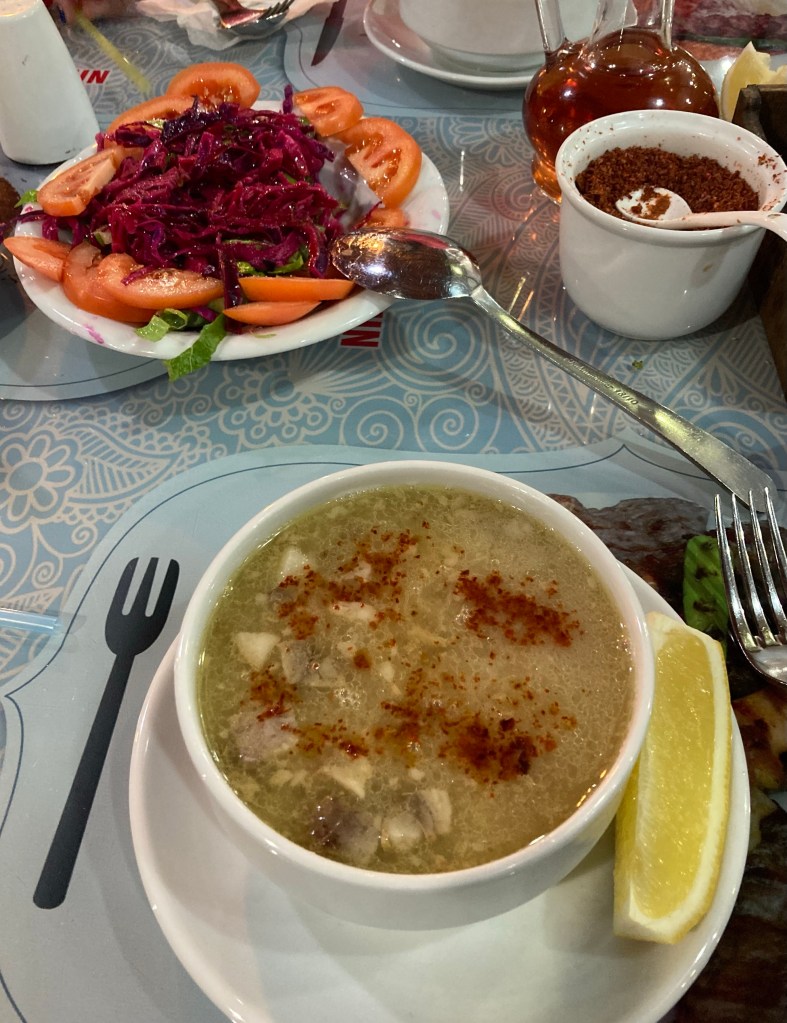
There’s been a minor culinary revolution in the Uk recently where ordinary, non-Michelin-starred citizens have been buying and cooking offal for their meals. For many years, media focus on offal dishes has been directed at the ambitiously priced menus served at a few high end restaurants rather than in British homes. It seems it was an older generation serving up the less photogenic parts of animals to eat. Try and come up with a list of tasty sounding British offal dishes and you quickly run out of inspiration. Mention of cooked liver still causes a shudder of revulsion through many a 50+ year old with distant memories of granular, metallic slices of an indeterminable shade congealing in a mess of sloppy onions. Tripe has so long been a term of abuse in the Uk those that still eat it are seen as bloody-minded eccentrics obstinately chewing their way through a meal of penance.
In Turkey that’s never been the case and anyone frequenting well-run Turkish establishments will be aware of the popularity of soup and kebab options putting tripe, liver and head meat on the menu. If visiting or resident in London there’s a number of restaurants, cafes and shops, such as Anteplilar and Yasar Halim on Green Lanes in Haringay where excellent offal meals and ingredients can be bought. If you’ve been lucky, Turkish friends will have introduced you to the delights of a late night Işkembe çorbası to soak up the alcohol, a garlicy and vinegary Kelle Paça on a cold day or maybe a good hot plate of Arnavut ciğeri as a wedding meze.

I personally have become something of an addict to the cooked innards and extremities on offer here in Turkey and eagerly search out meals I haven’t tried before. With the help of Turkish friends keen to showcase their regional and national dishes I’ve been fortunate to be taken to off the beaten track and unassuming eateries where the focus is always good food and the deserved reputation that follows.
Knowledgeable recommendations are mainly the key to offal eating here, make sure it’s at a place recommended by friends, family or trusted acquaintances. If you find yourself with indifferent İşkembe, burnt böbrek or worse, becoming umbilically dependent on the ceramic comfort of the toilet due to a hygienically deficient Kokoreç then it’s likely you went off piste. Culinary exploration is an admirable notion, one I often try, selfless gourmand that I am, but if you’ve limited time in Turkey- take advice from a local and don’t miss out on some of the superlative dishes on offer here. Köyceğiz fortunately has a wealth of places serving quality pluck (alternative name for offal!) and it’s harder to find a bad meal than good.
As well as the obviously definable offal meals you’ll encounter, I’ve included a couple of foodstuffs foreigners often bypass or simply aren’t aware of. If this confuses or upsets any readers then write to your local Mp to complain. I’ll respond when they do. So to break you in gently, a perennial favourite.
Ciğer – Liver

Probably the most commonly encountered offal dish in Turkey is liver. Two regularly found menu items are Arnavut ciğeri and yaprak ciğeri. The first is cut into smallish pieces, lightly coated in flour, salt and pepper and fried in butter, and is often served at weddings as a meze. Yaprak means leaf in Turkish and the meat is thinly sliced, sometimes served sizzling on a heated skillet, as kavurma. Both are delicious and will instantly banish childhood traumatic memories of this distinctively tasty organ.
Çiger is found across Köyceğiz, invariably excellently cooked. Try Kebapçım (on Çarşı, the little busy street leading up from the square), Ayaklıgol and Tuana on the lake front as reliable suppliers. Iskele by the marina sells a good yaprak çiger. Kebapçım also occasionally have the off-menu holy grail of skewered kebabs comprised of liver, heart (kalb) and kidney (böbrek).
Kelle – boiled & slow roasted Sheep or lambs head
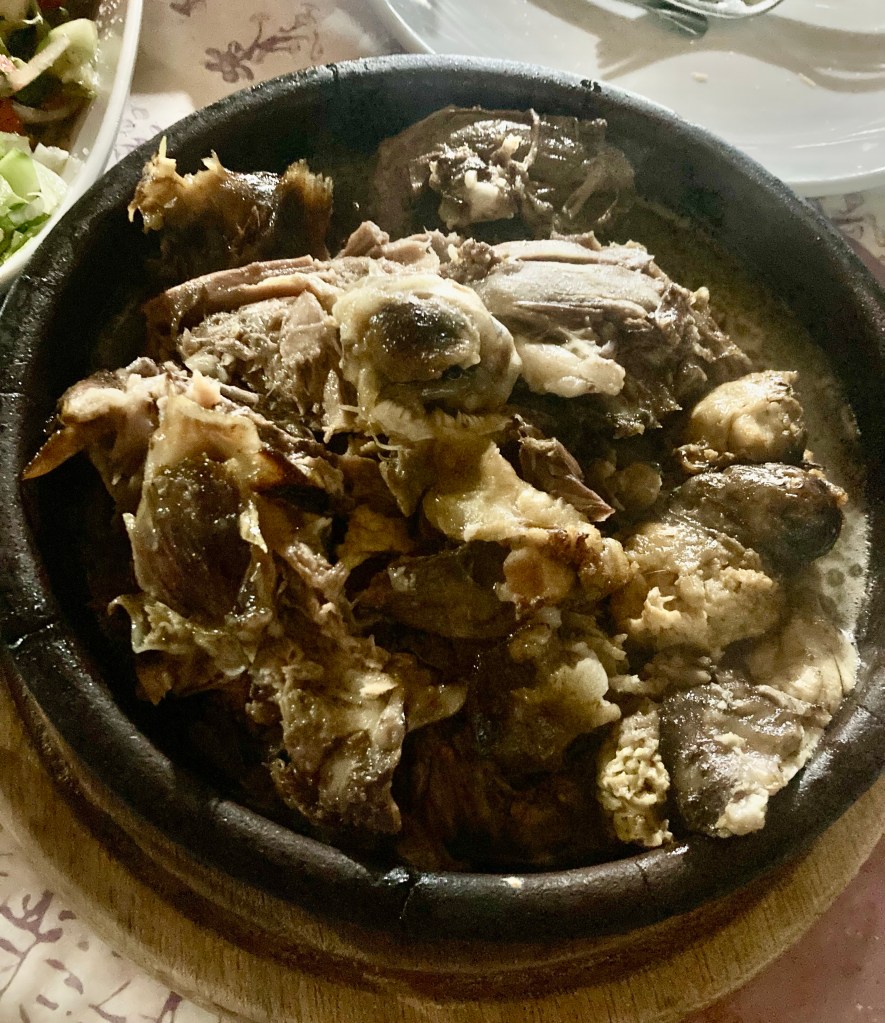
There’s no point being squeamish about this one. Restricting yourself to eating anonymous looking fillets or joints of meat is a bit of a cop out when there are so many other delicious parts of an animal to enjoy. A Middle Eastern speciality looked upon as a great delicacy, Kelle done well is a savoury mixture of flavours served in a hot skillet. At first glance it’s a jumble of dark meat until you begin to explore. Then you’ll find flaky tender cheek and head meat, firm tongue, delicate brain and the oft prized eyeballs. Served with a good Shepherds salad (Çoban salata), pickles (turşu) and fresh bread this is a sharing meal of distinction and one head will serve two people. When eating brain, the local way is to douse it with a good squeeze of fresh lemon and a dusting of black pepper.
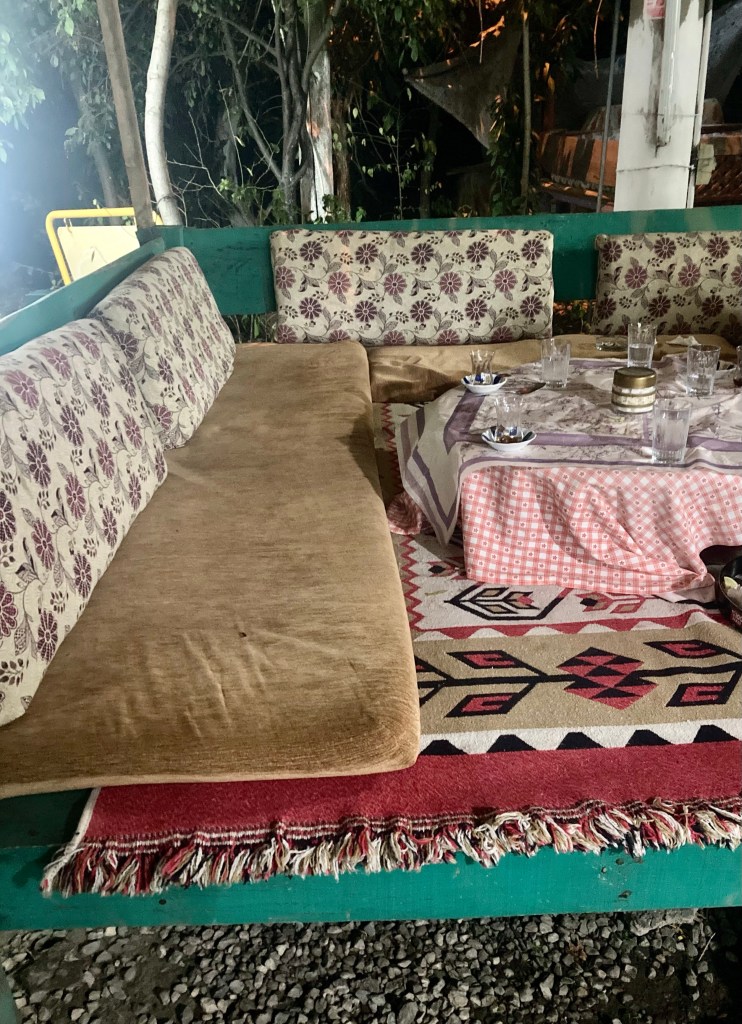
Kelle is notably served superbly at Uysallar in Beyobaşı on the main road. Get yourself comfortable, minus shoes, at a traditional Turkish sedan table, and take your time over a unique variety of taste and texture.
Kokoreç – lambs intestine & offal kebab
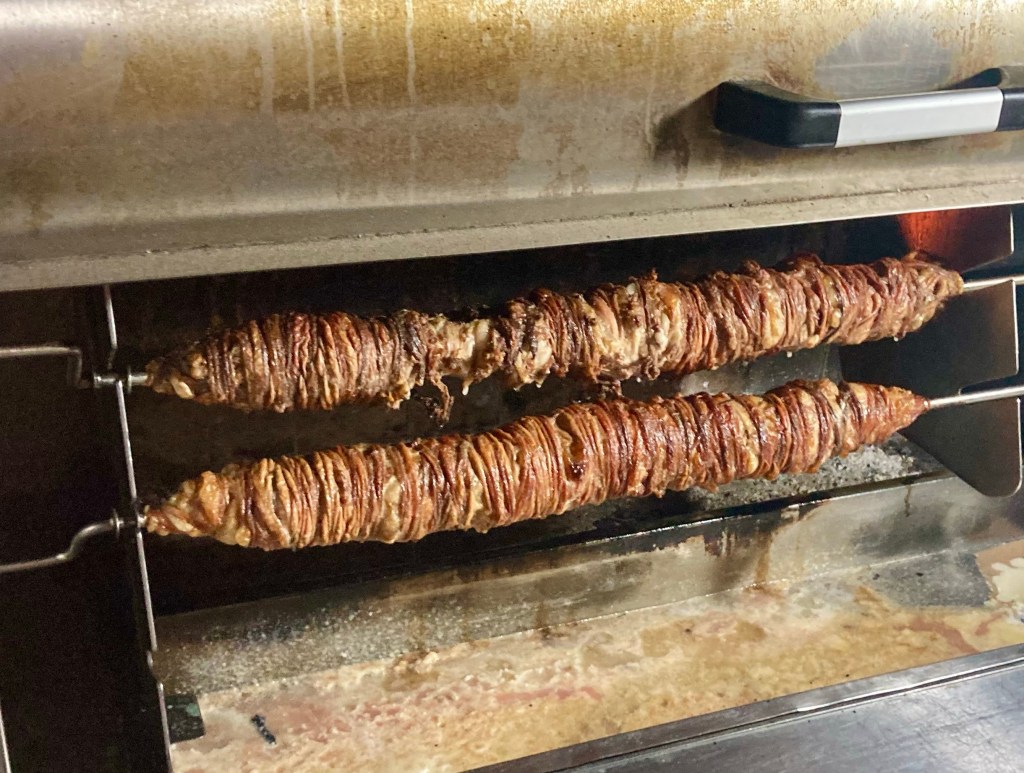
Kokoreç is the oyster of Turkish street food. An intricate kebab made of lambs intestines wrapped around a stuffing of liver, heart and lung then slowly grilled. To many, if done well, it’s the finest of distinctly flavoured specialty meals to be had from street vendors. A fair few others wouldn’t touch it with a skewering pole. I’m in the former camp, my personal preference being az acı meaning medium spicy, served either yarım (half of a fresh crispy baguette type loaf) or durum, on a soft delicious wrap.
In my less than humble opinion, the best Kokoreç is served late in the evening. This is when trade is moving at a regular pace, the distinctly gamey smoke is billowing from the cart or kitchen and the urgent chopping of the Kokoreç master reducing the delicious but somewhat rubbery kebab into tiny pieces, echoes above the evening clamour.
In Köyceğiz the obvious recommendation is Davut on the Kordon (Promenade) which is renowned for faultless meat dishes, sourced by the owner, a genial master butcher. There’s a small black and white street dog (imaginatively named Kokoreç by me) who will bounce up and down excitedly when your food comes, entranced by the allure of your kebab. Ignore her, it’s unseemly in a dog of her age.
There’s also a renowned little kokoreç trolley just by the roundabout on the way out of town. Early evening is a popular time to visit.
Şirdan (stuffed sheeps lower stomach) & Mumbar (stuffed sheeps intestines)
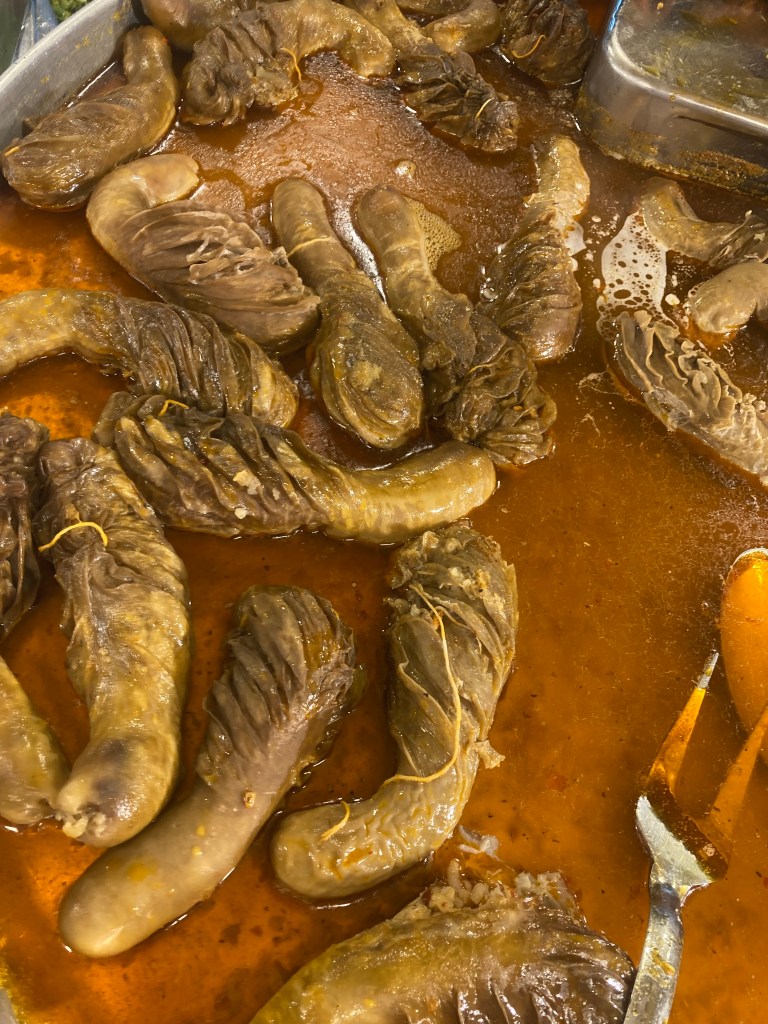

These two intriguing looking delicacies aren’t strictly local to Köyceğiz. However there’s been a welcoming move to showcasing regional food in the town via food fairs and it’s occasionally possible to experience the genuine article made by chefs from their home province.
Mumbar are the rigorously cleaned intestines of a sheep, stuffed with a mixture of rice, tomato paste, minced meat, and spices. They really are delicious and worth a try. There isn’t a huge difference between this and a sausage.
Şirdan is the lower stomach of a sheep again stuffed with minced meat, rice, tomato paste and spices. The end is tied of stitched rather like a haggis which it’s basically a version of. Also very tasty and not to be missed this Adana speciality isn’t easy to find in the Muğla region so it’s always a bonus to find a vendor.
Çorba / Soups
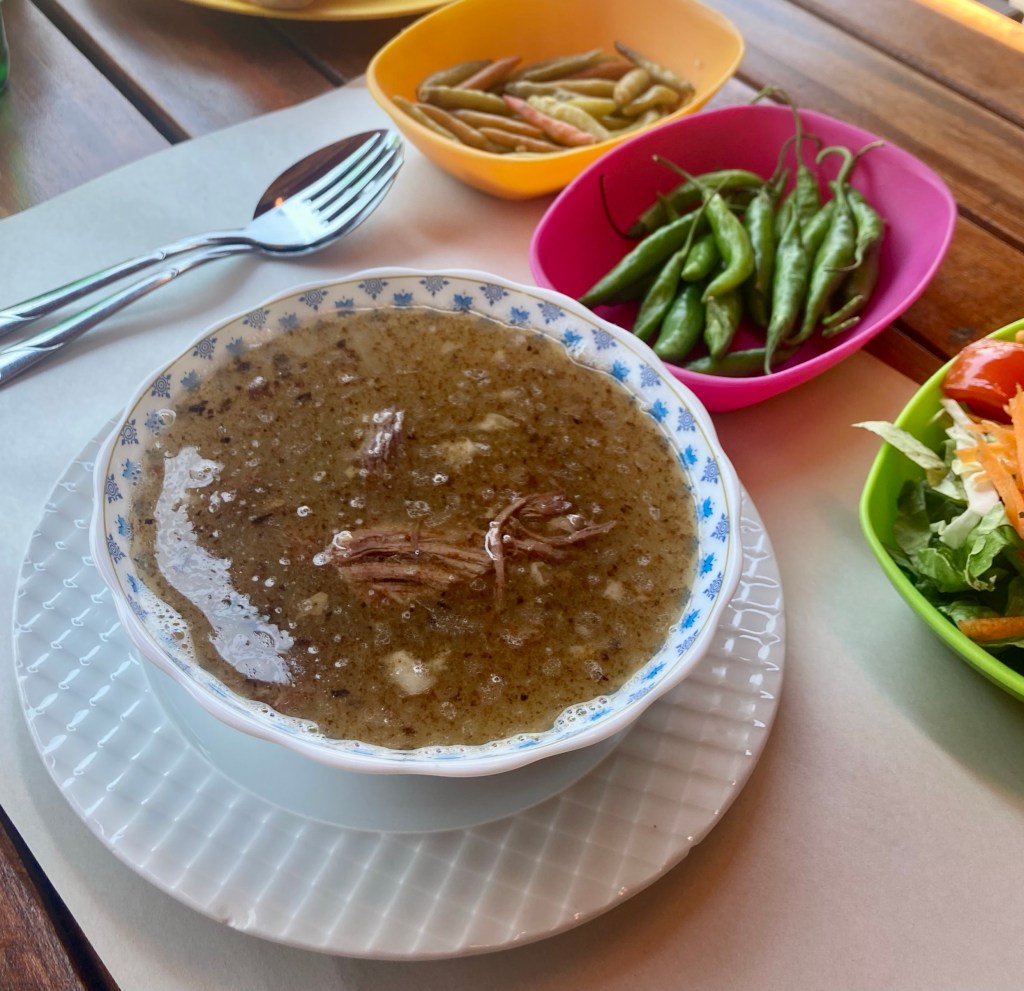
Turkish soups deserve a comprehensive write up of their own, the variety of tastes and ingredients, often restricted regionally, is extensive. However, we’re talking offal here, and this brings us to a select group of deliciously distinct Turkish specialties. There are a number of combinations of ingredients due to region or restaurant preference so I’ve stuck with the basics. With fresh bread one generous serving easily suffices as a filling and economical meal.
Soups in Turkey are often consumed at either end of the day. You’ll see revellers and late workers enjoying a bowl after midnight whilst it’s usual to find early risers fortifying themselves before work begins. A tip for you …all varieties go great with hangovers.
Kelle Paça is first up. Chunks of tender head meat in a hearty stock. Like many Turkish soups it’s usually enlivened with the addition of lemon, garlic sauce and vinegar. The garlic and vinegar bottle are usually already present on the table or will be brought with the meal. If they’re missing then ask, otherwise you’ll miss the full impact. I have a tendency to scatter a teaspoon of chilli flakes in there too, especially on a parky winters day.
Işkembe çorbası or Tripe soup is very popular and people will direct you to their own favourite establishment. Again with the addition of garlic and vinegar it’s a hearty meal, especially popular as a late night sop for an evenings drinking or a good starter on the morning after the night before.
Ayak çorbası is made from sheeps foot. Personally, though I enjoy the novelty of variety the foot itself is relatively mild in taste. The soup base holds most of the flavour but it’s still a great, if less frequently found dish.
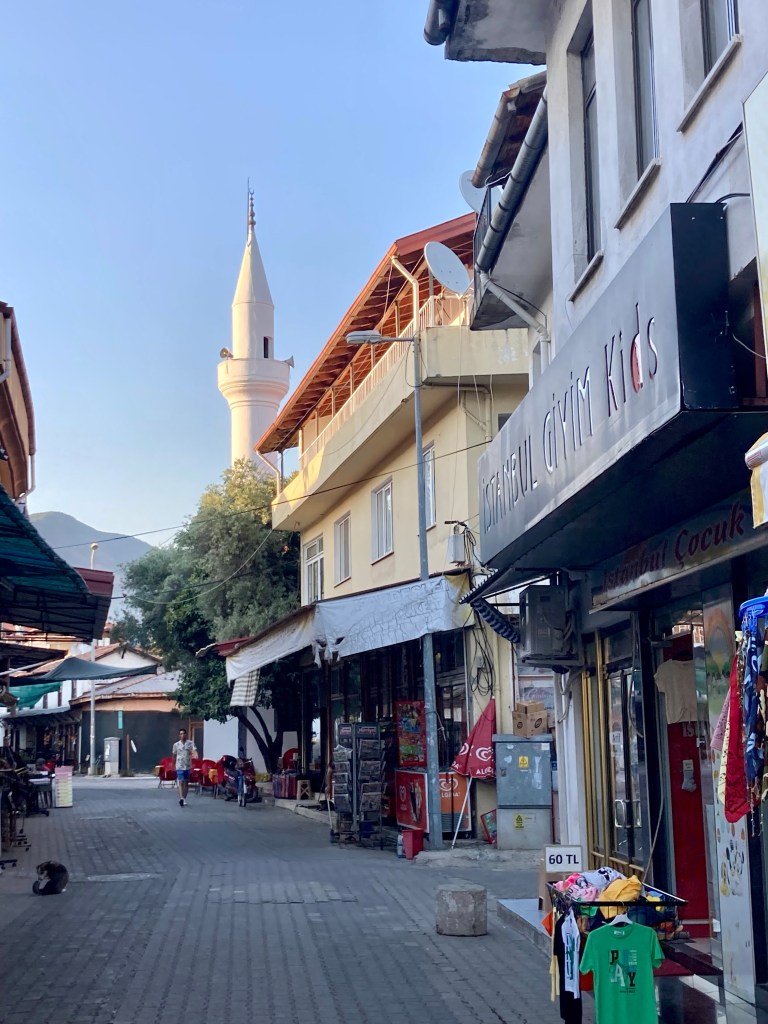
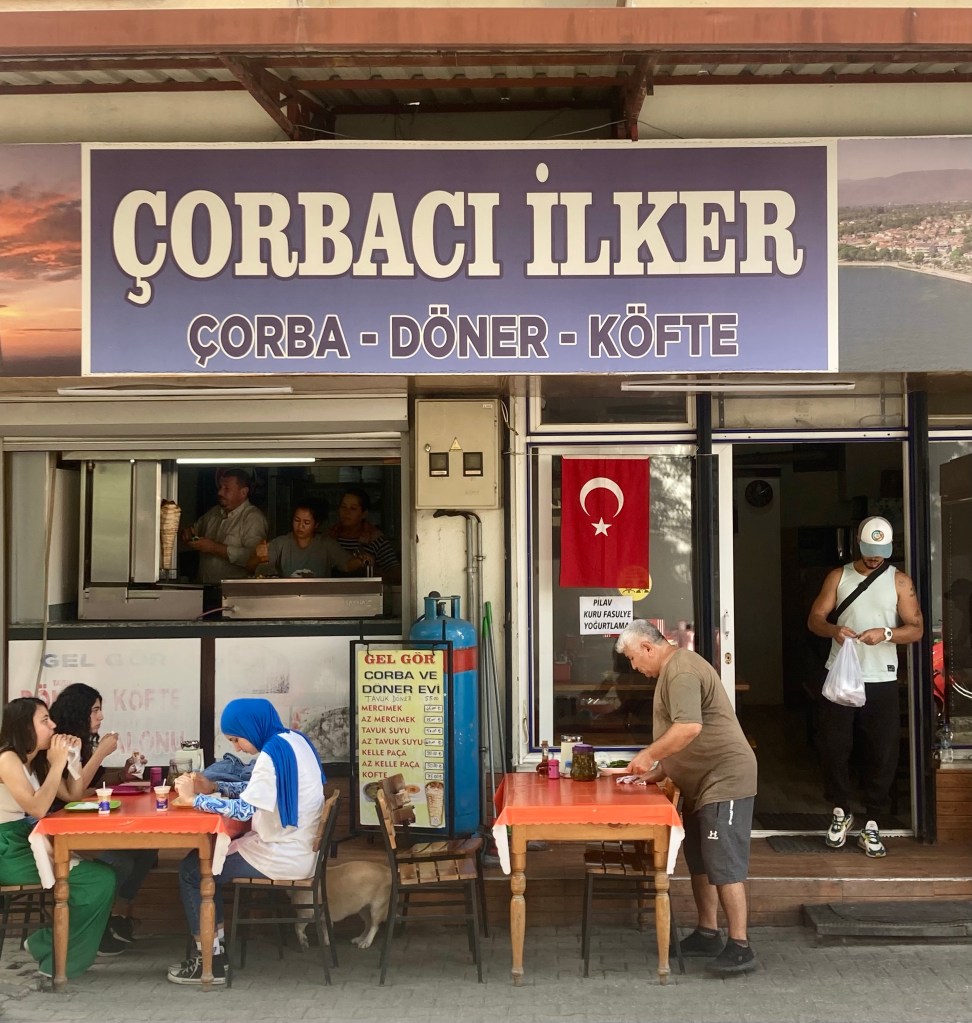
In Köyceğiz there are many places serving superb çorba. I’d recommend trying the little hole-in-the-wall establishment called Çorbacı İlker opposite the mosque on Çarşı (where they also sell delicious durum wraps), and just up from there, next to Nitro bisiklet is Tijda Doner where the food is marvellous and the ambience laid back.
Şeftali Kebabı
Not a Köyceğiz dish, şeftali kebabı is a Cypriot meal beloved of the island’s barbecue mad inhabitants. They really are superb and will undoubtedly put me in an early grave along with all my other unhealthy habits. I’ve put it in here because I’ve eaten it in accommodating local restaurants who allowed us as a special favour to prepare them ourselves which they then cooked on the chargrill. In exchange we bought drinks and lots of meze and salad and paid a small fee, a very Turkish way of doing things.
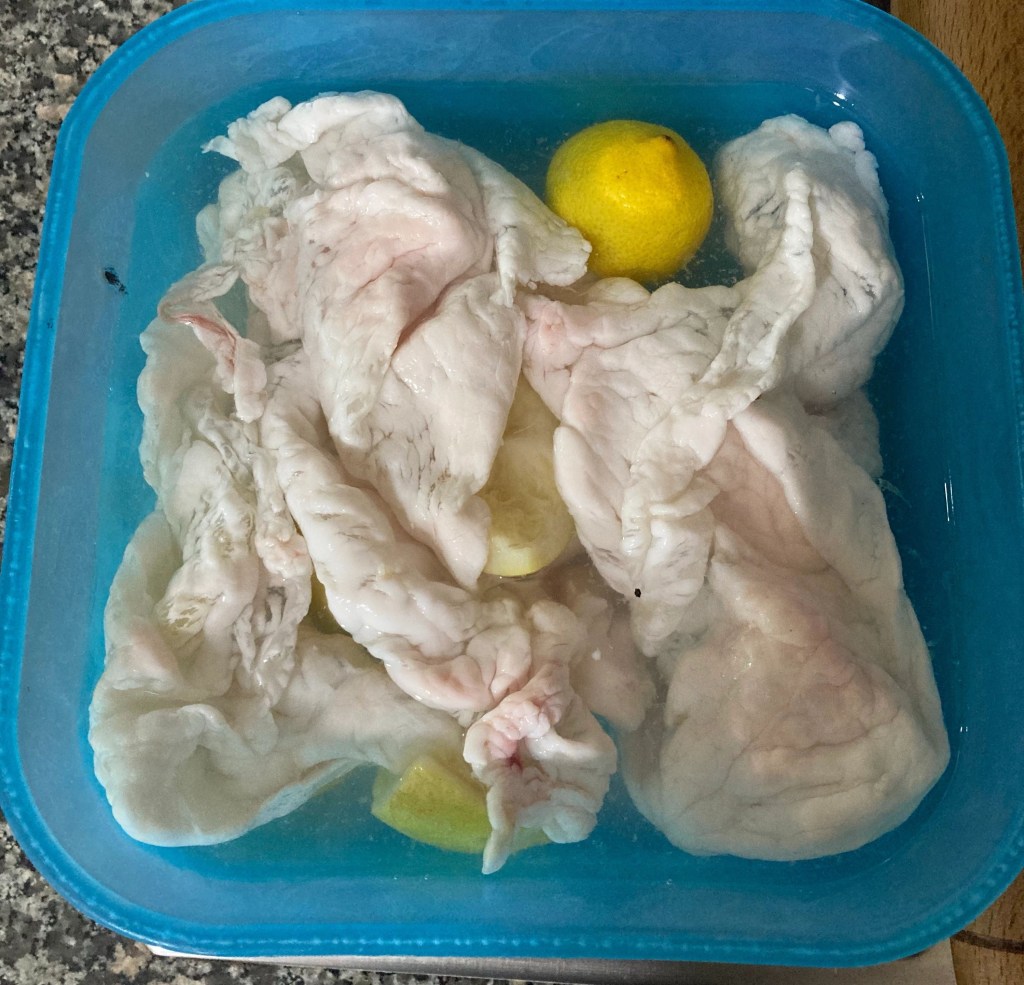
The recipe is relatively simple though not without action. First get to know your local butcher, then ask if they can get gömlek which is the caul of fat around a lambs stomach. With persistence you will find an enterprising kasap (butcher) that will source it for you.
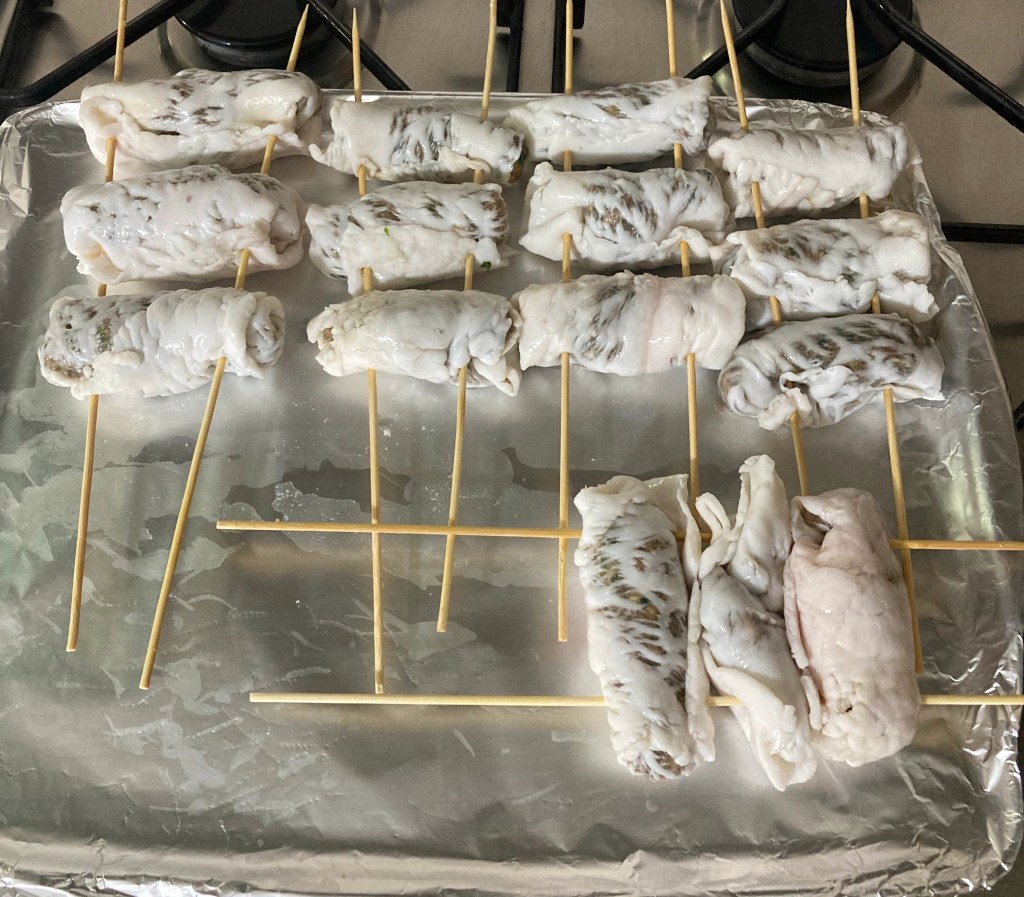
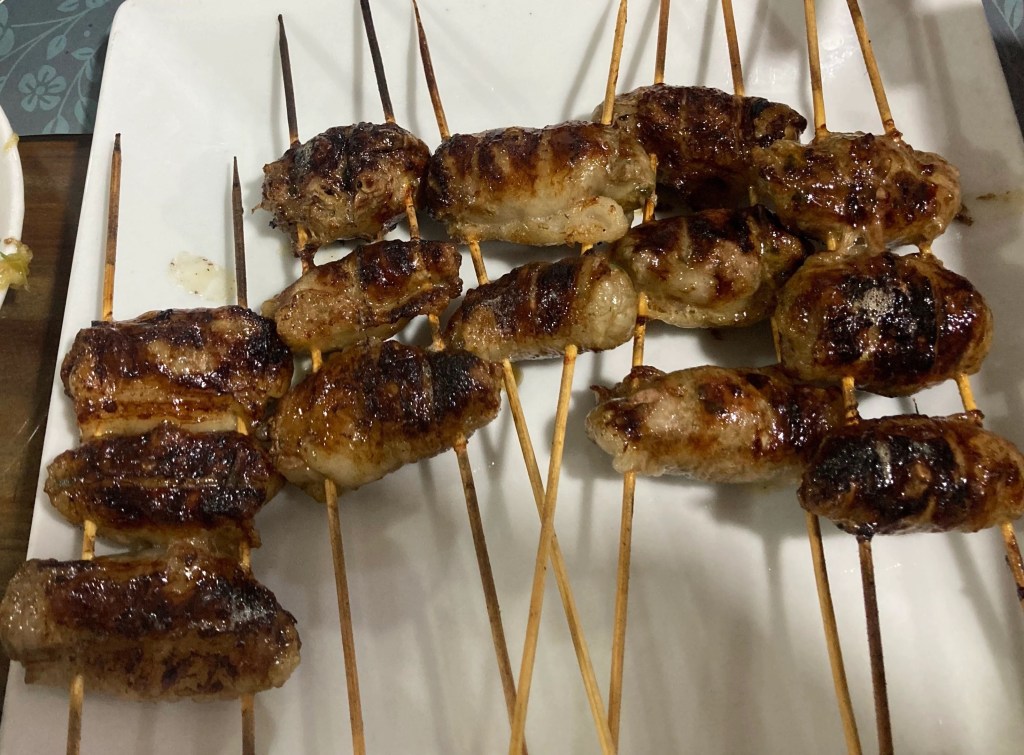
This is soaked, cleaned and cut into pieces big enough to wrap around uncooked köfte. There are recipe’s available online for the exact method, Once you’ve plenty of these little beauties prepared, either put them on a grill yourself, mindful of the quantity of fat dripping below, or get a friendly restauranteur to cook them by employing a bit of wheeler-dealing. In Turkey, autumn and winter means customers can be scarce and this is when you’ve a good chance of success.
A couple of odds and ends
In doing a little research for this I came across an alternative phrase for offal – “variety meats”. A terrible, bland way of describing such a source of adrenaline inducing (try and eat an eyeball for the first time without your heart pounding) scran. However it does at least allow me to shoehorn in a couple of examples of famously addictive foodstuffs not always appreciated by visitors to this country.
Çiğ köfte

Ok this is slightly complicated so don’t sue me if you get it wrong. Çiğ Köfte nowadays is a bulgur based, spicy vegetarian meatball eaten either wrapped in lettuce leaf or durum. Nothing offal-ish about it. However this is a recent development, as previously it was made from similar ingredients but with a good quantity of raw minced lamb ground by hand into the the spiced mix. The thinking being that the spice and grinding “cooked” the meat. This was outlawed for sale in public places but the alternative meatless version became widely sold such as in chains like Comagene. The meatless version is well worth buying, and not hugely different from the original except perhaps in texture.
For the purist though, you must try the original recipe, which is pretty much now only made in homes as far as I know, plus I’ve seen it made at a gig by a band who used the thumping of the meat mix as percussion in their set. Raw meat dishes made by a musician mid-gig doesn’t sound alluring but you have to go with the flow sometimes. Çiğ Köfte is an edible page of Turkish history and you get the thrill of waiting nervously by the bathroom for a few hours to find out if the mince was fresh.
Hamsi
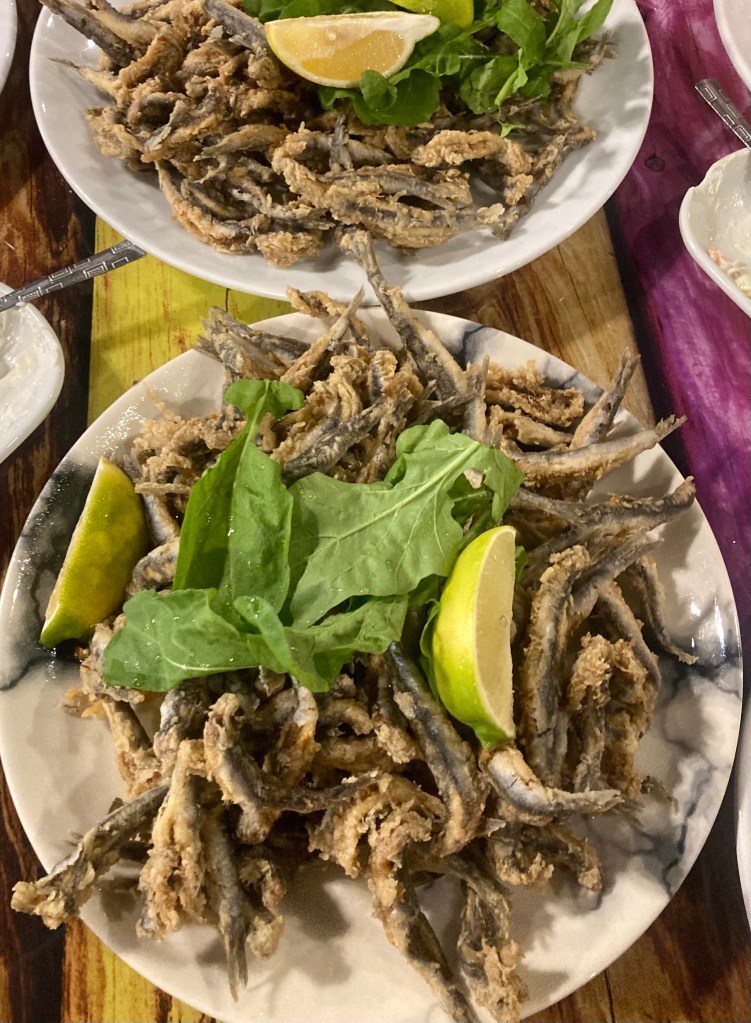
Hamsi is the venerated Black Sea anchovy which is awaited with glee by Turks across the country. Even in London I’ve seen plastic pop bottles surreptitiously on sale, filled with Hamsi and frozen before the flight over. There’s a social aspect to eating this delicious flour-dusted little creature, with parties gathering to wash it down with raki and meze. It’s basically whitebait, a little oily but addictive, and greatly appreciated by fellow Hamsi connoisseurs.
Arabin Yeri at the back of Köyceğiz market serve Hamsi (amongst other fish) in style and with the elan of the expert. Book a table in advance towards weekend, then take it easy when you get there and enjoy the bustle. Last time we went it was bring your own bottle which kept the bill surprisingly low.
Although this is somewhat Köyceğiz-centric, the same rules apply when eating across Turkey. Do your research, speak to locals, try anything new, and don’t judge a restaurant by the faded paint, sun-bleached menu and doorstep-sleeping dog. If the place is busy with locals you’re usually onto a good thing. More details on where to eat in Köyceğiz are in the blog, plus a few other odds and ends.
 ON THE MOOCH
One response to “An offally big Köyceğiz adventure- Turkish culinary innards & oddities”
Excellent article again Paul, it is mouth watering!
LikeLiked by 1 person