
Of all the worlds major cities London has to be one of the most walkable. Not just for sanitised mini tours of carefully preserved quarters but long distance yomps taking in the ancient and modern, nature and concrete, bohemia and industry. An extensive public transport system will drop you off at new starting points or pick you up when footsore and ready for home. One of the few positives of Covid was that it taught many of us the value of our own back yards and for me the hours put in exploring by foot my home city of 25 years made up partially for the isolation endured.
At some point towards the end of summer 2020, I chose to use the scant free time from my hospital job to walk. Not stroll, or perambulate but stride without any real aim apart from the desire to burn off the dirty great cloud that was hospital life at that time. Sunday was my only opportunity to be out in daylight and enjoy the brief period of clean air, and largely traffic free roads we were all amazed were possible and have now begun to forget. There was also the essential need to recharge myself for the next 50-60 hour working week as the virus took it’s toll on colleagues and services.
The remaining restrictions and dismal options for entertainment being what they were meant I walked across, around, in,out, up & down London to the extent my brother started calling me Forrest Gump. This determined wandering follows neither map nor GPS though an occasional check on the phone does come in handy when you find yourself down a piss reeking alley as dusk falls or an endless industrial estate when a winter rain storm starts. In London you’re rarely a few minutes from some kind of sanctuary when enough is enough.
Living in North London, the obvious way to walk was roughly South otherwise I was going to be spending my precious free time wandering the streets of suburbia. Even someone with the cock-eyed sense of direction I was born with can’t fail to locate and stop at the huge barrier of murky water known as the Thames. Virtually any starting point roughly along the North Circular will take you onto an enjoyable scenic and interesting route of which there are multiple variations to be tried out. I tended to do long looping walks that came out at around 20 miles but shorter walks or using public transport for a new starting point suited when time, repetition or curiosity were factors.
Whilst the stretch from the Palace of Westminster to Tower bridge have long been tourist must-see’s, immediately after Tower Bridge up to and beyond Greenwich are still relatively lightly visited except by locals and determined searchers for the ephemera, lesser known history and unfamiliar landmarks of East London.
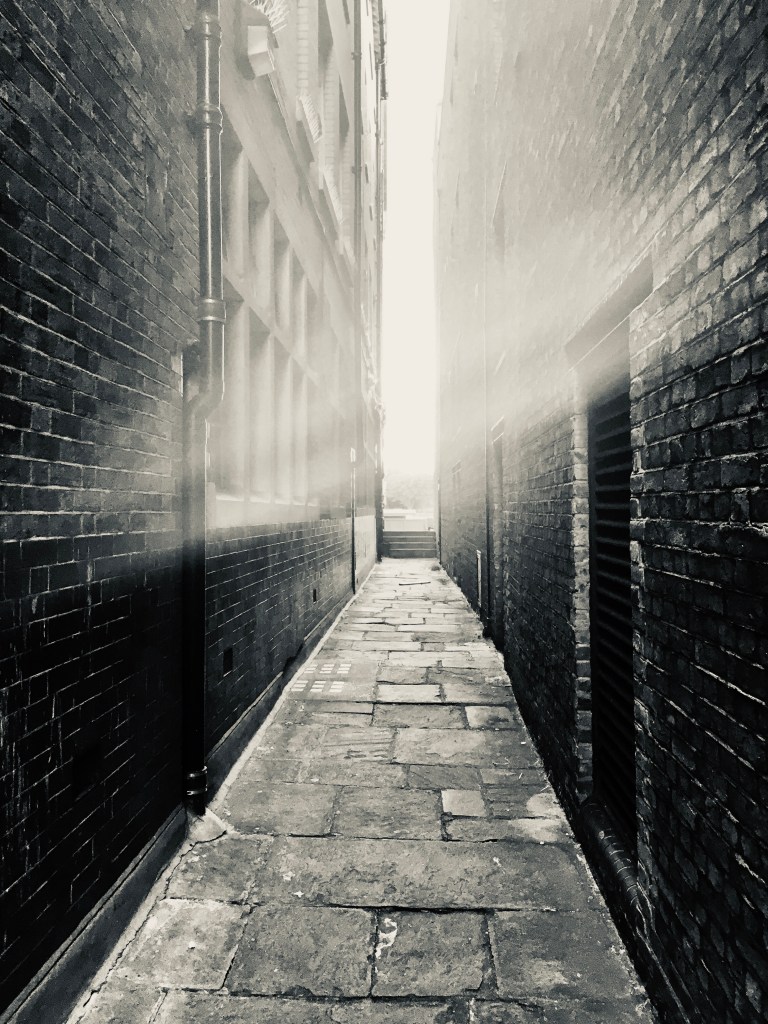
There are multiple variations to a walking route roughly following this stretch of river signposted as the Thames path. London really is densely layered with all facets of history, whether it be architecture, crime, celebrity, political, the arts, natural, sport ….whatever your poison I guarantee there’s something of interest in almost the whole city if you look deep enough. Often the most unremarkable looking streets will have had a notable ex-resident or is the site of some ancient tale of the capital. The area from Wapping, through Limehouse, Canary Wharf to Greenwich foot tunnel is no exception.
Despite the massive development of the area there are still tiny alleyways and roads leading to ancient watermans steps, centuries old pubs, maritimers chapels, grand Merchants houses,interspersed with the once industrious warehouses. Behind all this are occasional sanctuaries of green where it’s possible to stretch out on a sunny day with picnic, booze,dog and friends. Perfect spots to smell the estaurine brine and curse the obligatory uninvited bongo player with the crop circle tattoo’s and eye watering spliff.
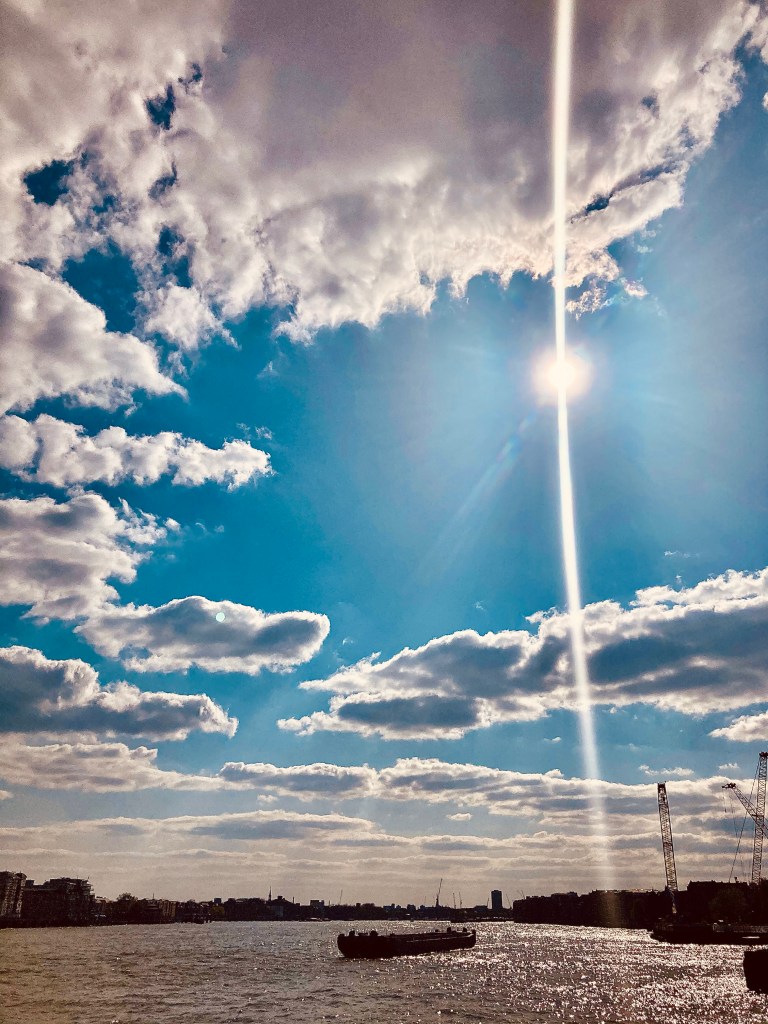
For the regular walker frequently frustrated by the often senseless barriers put in our way it’s worth reading this old Guardian article. https://www.theguardian.com/cities/2015/feb/24/private-london-exposed-thames-path-riverside-walking-route I’ve attempted and succeeded at legally entering some of the blocked or camouflaged public access areas by the river, though it’s a hollow victory in some cases as there are more scenic, less fragmented viewpoints to be found. Cocking a snook at high-handed developers & land owners however is important otherwise there’ll be little left of the capitals secret places for us great unwashed to find and savour.
I haven’t tied this post up with exact directions as it’s up to you where you go, there’s plenty of walking guides on the net should that be your thing The main objective is to get out there and enjoy any which way your legs , or warped sense of direction take you. In the case of the Thames path, make sure you probe those forbidding looking side alleys underneath riverfront apartment complexes and you’ll be surprised how many are public rights of way into little used waterside areas.
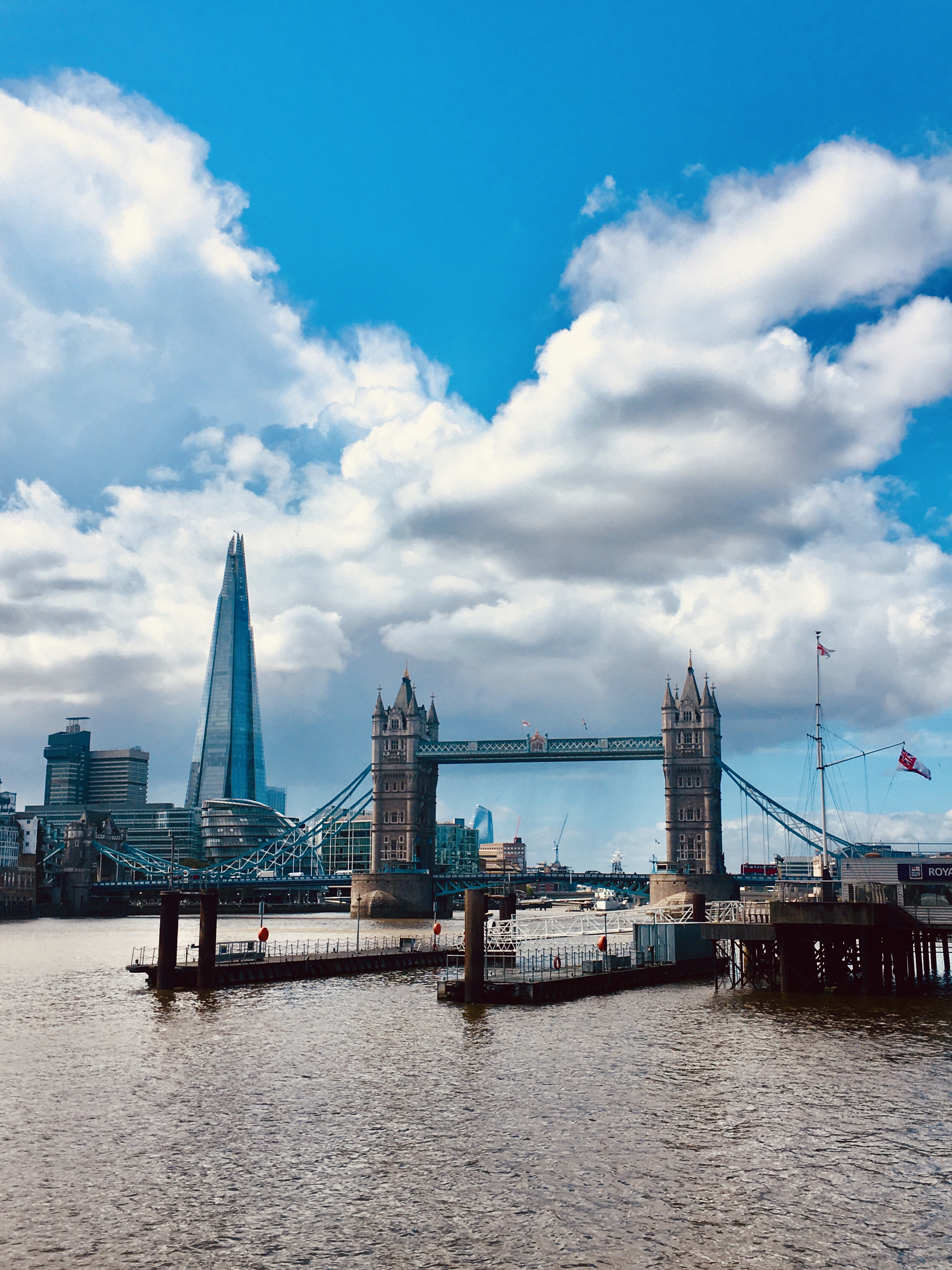
One easily accessible place to start a good riverside trek is from the base of Tower Bridge at St Katherine docks. Here you get the first sense of being off the beaten track as although it can be busy there’s usually room to sit down at the Dickens inn or one of the reasonably priced chain restaurants around the waters edge. The Dickens has too much of a faux olde worde feeling for me (opened in the 70’s- Charles Dickens grandson being the ribbon snipper that day) but it’s location is plum overlooking dock and river.
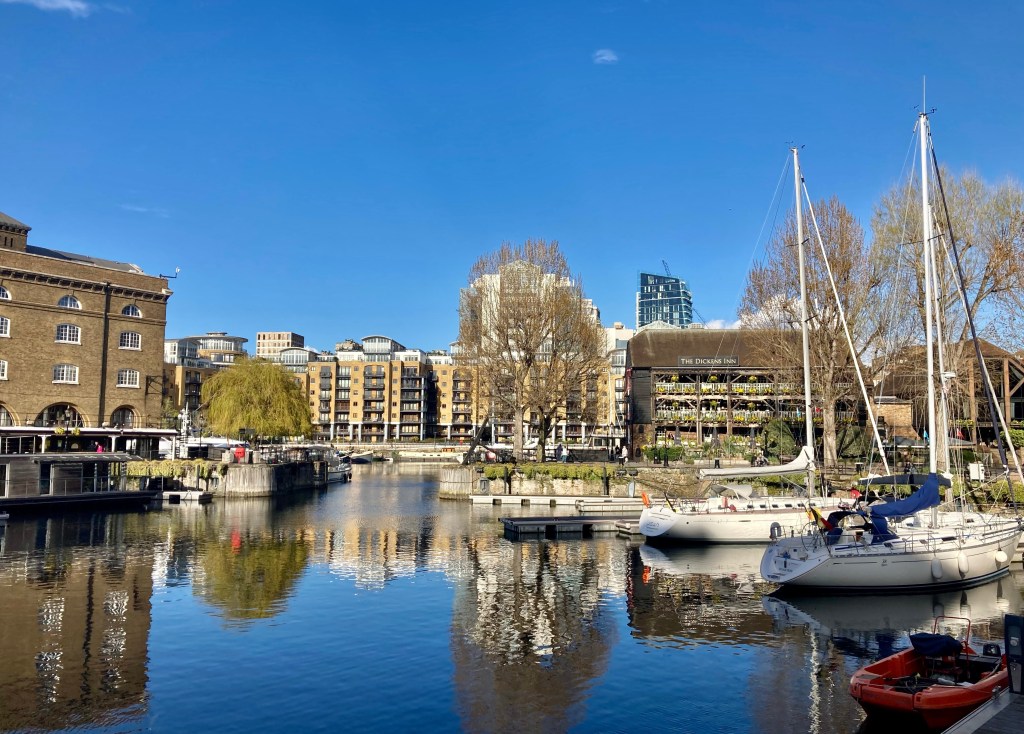
On a sunny day the combination of boats, iconic landmarks & open water make for a salubrious spot to bask over a glass or cuppa. If as a resident you’ve overdone the usual London sights then here’s a pleasant surprise to take out-of -town visitors rather than trailling them around the London eye, Buck house and Cyberdog yet again. Even the most decrepit family member, hungover friend or feeble (“I don’t like walking…”) date can make it to the dock. Lot’s of buses and Tower Bridge tube station service this area
From St Katherine docks you then have the option to try and stick to the river front or stay on Wapping High Street. The river terrace here gives spectacular views of Tower Bridge and other London landmarks and also this is where the river starts to feel more of a working stretch of water rather than a tourists photo opportunity. There’s an impressive mooring of Dutch barges just offshore from St Katherines Way and the first major conversion of warehouse to residential is close by, incidentally if I could turn back time (wait for it…) this is where Cher had a home for a few years. Ooooohhh that felt good.
Here also is The Town of Ramsgate pub, long and narrow with a tiny yard backing onto the river. I love this place because it’s unassuming and still looks and feels like a traditional pub.Built in 1758 on the much older site of a tavern the peripatetic dipsomaniac can do worse than pop in here for a stiffener before continuing on their merry way. They also serve hot drinks and fizzy pop to the joyless, religious or underage contingent. Just next door are Wapping Old Stairs where you can get down to the shore at low tide and take arty pictures of mud and manky stonework.

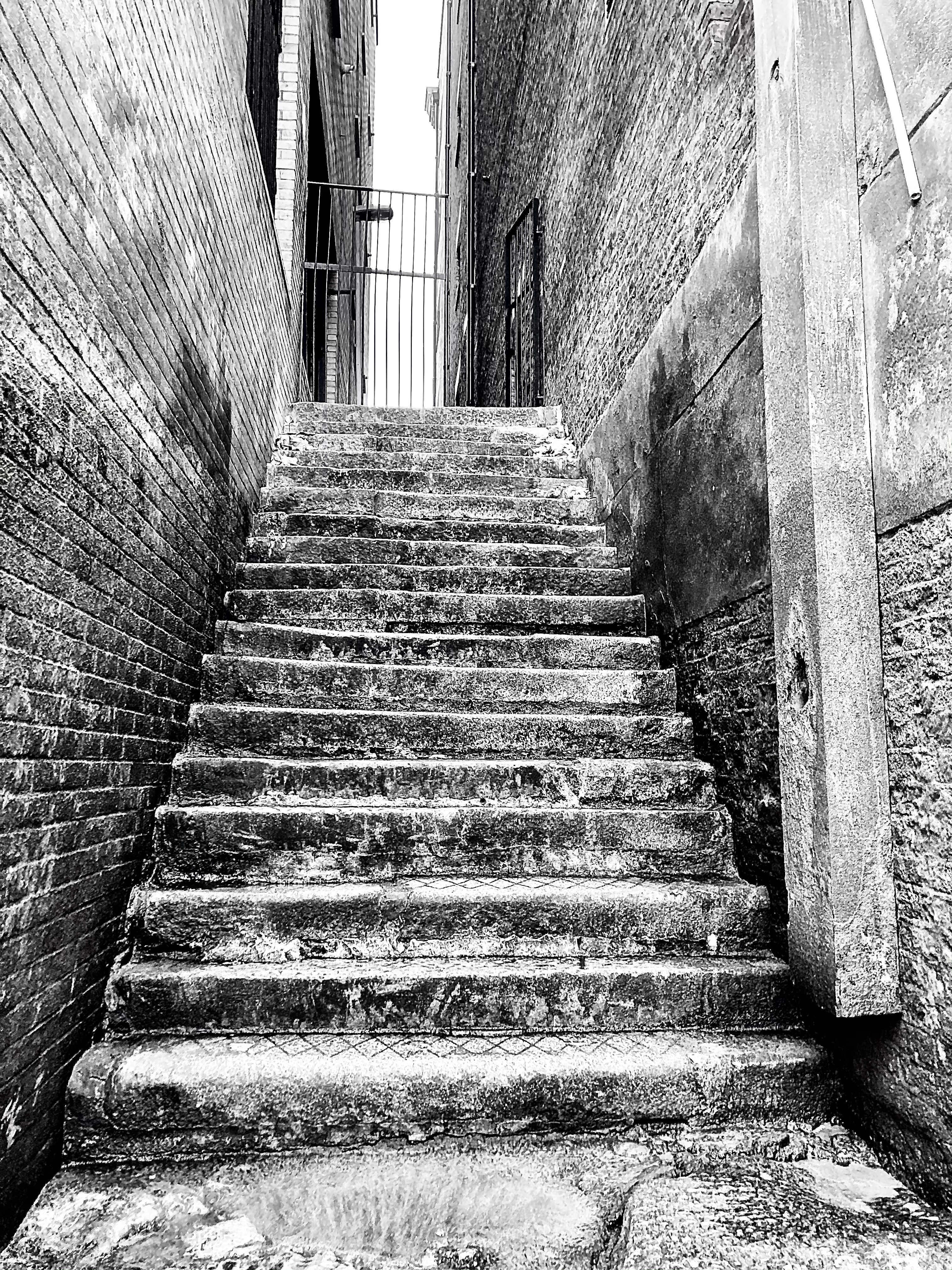
For the unadventurous you can continue zombie-like along Wapping high street following an online route ticking off well researched dullities. However I doubt the unadventurous have bothered to read my barely educated yet titillating prose this far so I’ll continue my own variable path. This area of London is rich in history and sights, but only by nipping down disreputable alley ways to watermans stairs or off side streets to find unheralded Victorian pubs, bomb damaged chapels and pre-WW2 buildings that escaped the blitz will you pick up the atmosphere of this fascinating area. The high street is a fine conduit for a wander if you give yourself time to deviate.
The narrow alleys leading to the watermans stairs are well worth following down to the shore when the tide’s in or out. Mudlarking , the searching for and collecting of items on the river edge has become a popular pastime along the Thames shore. It’s popularity means a permit is required from the Port of London authority to reduce the possibility of items of historical value disappearing and also prevent commercial enterprises taking over. Otherwise there’s nothing to stop you looking at the centuries of detritus washing back and forth on the river tide. This includes old clay pipes, Roman & medieval roof tiles, centuries worth of shipping tools, coins, old bottles, ancient bones washed in from the abbatoirs that once lined the River Fleet tributary and many other surprising objects dating over the last 2000 years of the city’s existence. Lara Maiklem is the guru of London mudlarking and well worth following for more details. https://www.laramaiklem.com/about/
I didn’t want to turn this guide into a pub crawl but it’s difficult in London not to signpost a walk without highlighting decent boozers, moreover since so many of them are ingrained with fascinating histories or spectacular views. The next pub along the high street is The Captain Kidd. Despite it’s appearence it’s relatively new in pub years, being converted from a 19th century coffee warehouse. It does however have a large yard overlooking the river and is as pleasant a place on an afternoon or evening to watch the boats pass. It gets busy on warm weekends but a space can usually be found if you simulate a hacking cough and a feverish sweat.
With a modicum of patience however if you continue a few minutes along the street you’ll come across The Prospect of Whitby-a fine establishment echoing with the ghosts of the good, bad , beautiful and ugly of the last 400 years. Rebuilt and altered several times since then it still has the atmosphere of a waterside pub, especially on a cold wet London night when the lonely, the restless and the hardy seek it’s convivial refuge. A popular establishment there’s usually a bustle of pleasure seekers around bar, rooms and galleries, evoking it’s gloriously inglorious days when wharf rats, smugglers and the hanging Judge Jeffrey drank here until he was dispensed a taste of his own medicine. A few years ago I hired (free at the time) an upstairs room for a group of overseas friends, the ambience and location contributed to a cracking, memorable Sunday afternoon enjoyed by all and if still available I’d strongly recommend it.
This brings us to Shadwell basin. An open body of water adjacent to a stretch of Thames path which then leads to the King Edward Vll memorial park. There’s a foody market ,with frequent live music, based here on Saturdays. A good place to meet, eat and drink throughout the year and conveniently placed amid the old docklands scenery. The park itself is small but a gem on hot summer days. In the dark days of 20/21 when any establishment promising fun was closed due to our modern plague it was an oasis of calm to sit reading and people watching here.
Continuing along the Thames path brings you to Narrow Street. This has been home to many notable people over the years, one of whom is rather unsung these days. Daniel Farson was a journalist, Tv presenter and writer. A self professed alcoholic with a riotous booze filled history, he pitched up here in the late 50’s and in 1963 opened the long defunct Waterman’s arms further along the Thames on the Isle of Dogs. This was one of several attempts to break his self destructive relationship with Soho. Despite it being well off the beaten track he managed a fairly short lived period of attracting many famous names to his music hall pub before his chaotic management style ran it back into the ground. For a glimpse into a salacious period of East End history, and life around Soho in the 50’s and 60’s read “Never a normal man”, Farsons excellent autobiography.
A welcome feature of Narrow Street is The Grapes, one of London’s finest pubs for it’s appearence, location and superb whitebait. Currently part owned by Ian Mckellan (who occasionally can be seen here unobtrusively doing his thing) have a look over the bar where a notably esteemed wizard’s staff is kept. It’s a magical pub in itself with the small decks overhanging the river, creaking wooden floors and narrow panelled stairs leading to an often quieter room. From here you get a magnificent view of the river and a lonesome Anthony Gormley figure stood resolutely a few metres out in the river.
This incarnation of The Grapes dates from 1720, though there’s been a pub on the site since 1583. The permanently pissed Charles Dickens was a patron and set the opening chapter of Our Mutual Friend there, a book which only Stephen Fry and myself have read voluntarily. Sir Walter Raleigh set sail directly from in front of the pub on his way to the Americas for the third time. On this occasion he also successfully sold the patent of his marvellous Chopper bike to the Pilgrim Fathers one of which was purchased by the last of the Mohicans who regularly hunted buffalo whilst riding it

The Grapes is at an important junction for the London Gumper. Just behind the small park called Ropemakers field is Limehouse basin. The Regents canal and River Lea (via Limehouse cut) meet here and provide leg-worthy routes back up to North, North East and West London and beyond depending which you take and how far you’re prepared to walk. Aside from being busy with walkers, joggers and cyclists on warm afternoons these straight-forward paths enable the peripatetic wanderer to drift off and enjoy the views with little need to check a map. Starting from North London I use several routes that take me to a joining point on the river or canal and then it’s just a matter of one step after another until I reach Poplar or Limehouse.
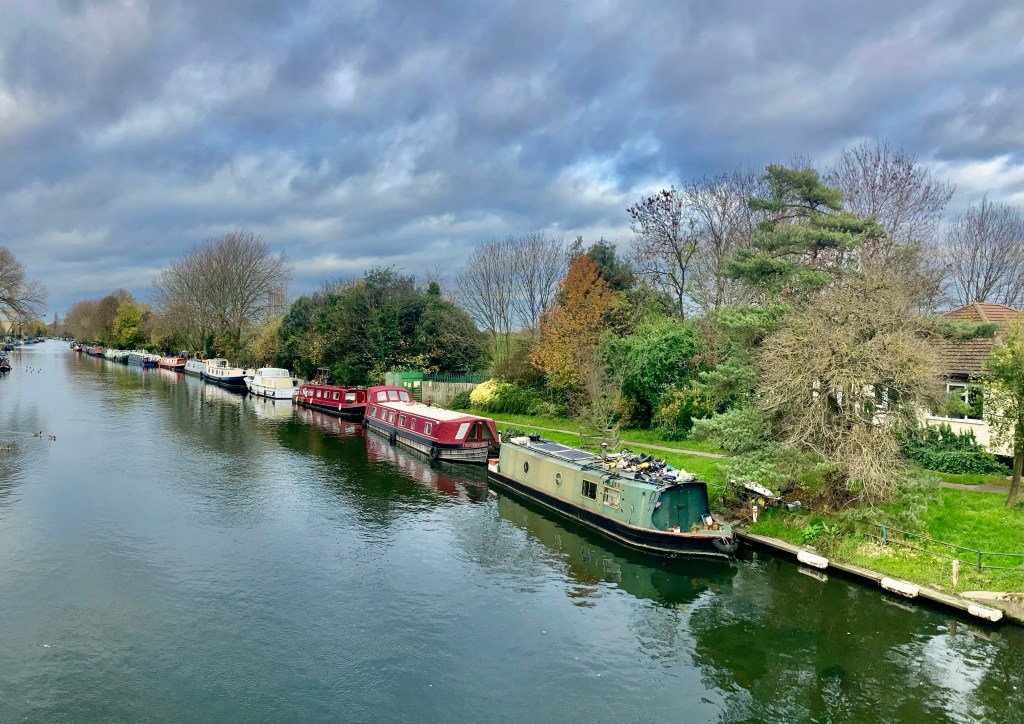
The Regents canal leads up to the fleshpots of Islington and Camden, then onward up to Little Venice, the Grand Union canal and beyond. It’s lively and scenic taking in trendy markets, bars,restaurants, parks and the Zoo though still with that waterside feel as you pass innumerable liveaboard narrowboats with smoking chimney pots. The river takes a more easterly direction giving a rural feel as you pass through fields with cattle, nature reserves and the open spaces of the marshes. There’s a point at Mile end lock where you can switch from canal to river or vice versa along the short Hertford Union canal and pass Victoria Park.
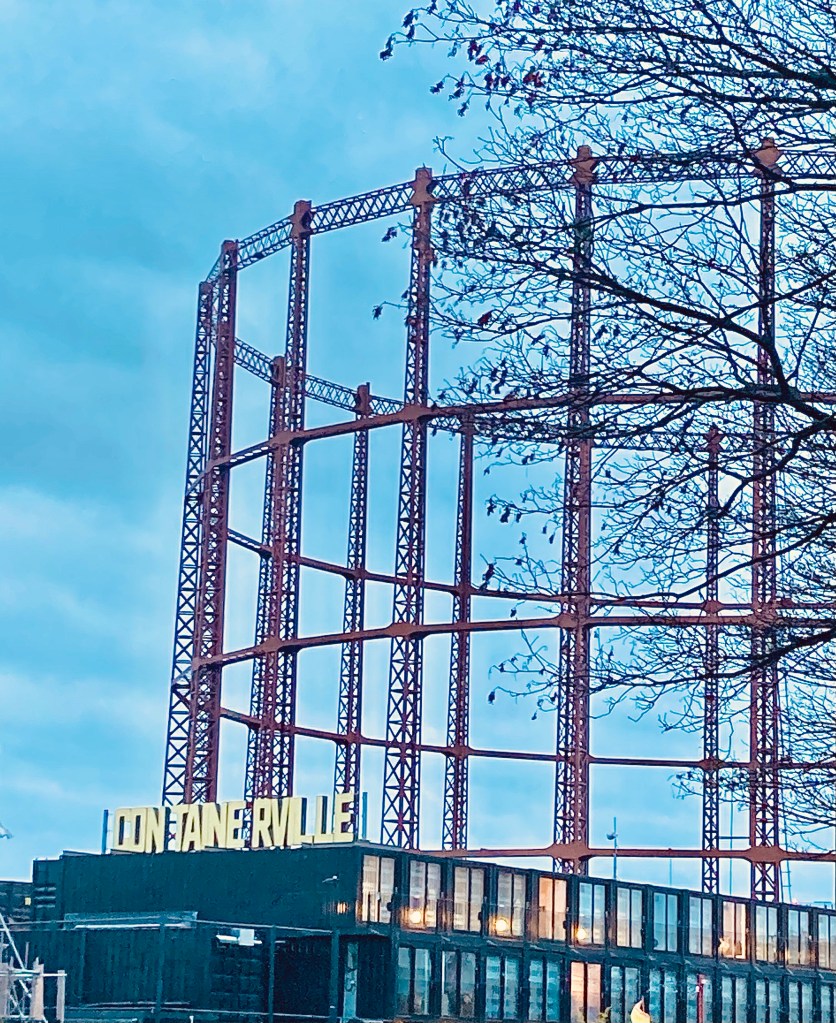
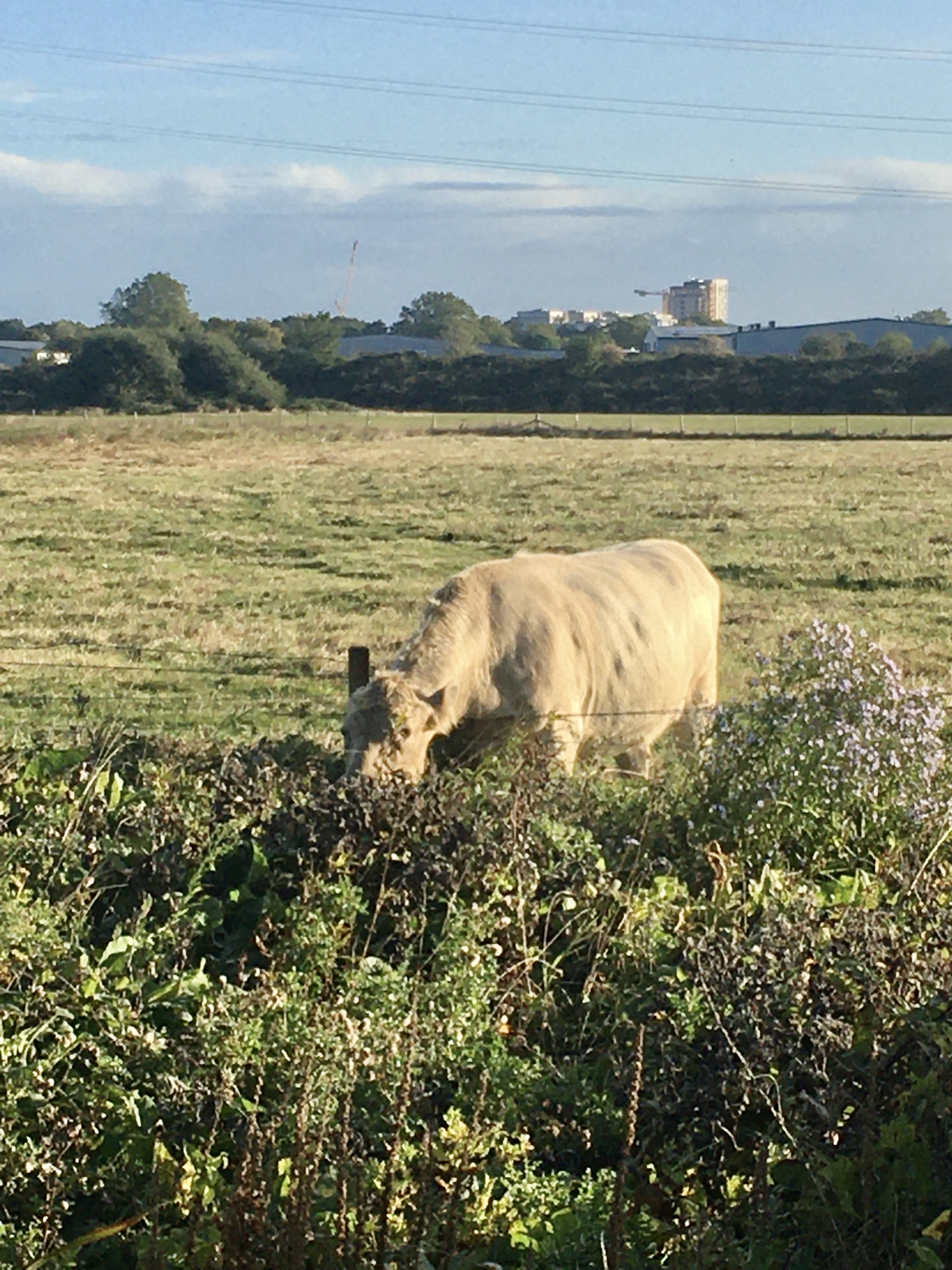
Being East London the cow only provides lacto-free non-dairy milk.
Alternately continue along the Thames path for impressive sweeping views of the river bends and iconic city views around Canary Wharf. The amateur phone camera snapper will struggle to pass by here without reeling off a few pictures. The Thames path is wide here and there are plenty of restaurants and bars for a break. At this point though you’re in touching distance of a far more attractive destination- Greenwich.
Continuing to follow the signposts for the Thames paths will take you past muddy beaches, industrial estates, expensive riverside flats and older style housing estates. It’s an area relatively unknown to the non-resident and should be seen by the curious Londoner or visitor. Likewise many of the streets behind the Thames path on both sides of the river are barely mentioned in the guide books yet well worth exploration.
The Underground is great for linking distant area’s of London but travelling on it doesn’t give you an accurate mental picture of how the city looks or connects, borough by borough. Once you catch the bug and get a few long distance walks under your belt the mighty metropolis starts to become a familiar landscape of people and places you can relate to. The need to eat, drink, pee and occasionally shelter from the weather forces you into places you wouldn’t ordinarily find. For those who are new to the city I can’t recommend enough exploring the place on foot and finding your own nooks and routes.
For the sake of concluding this piece I’ll bring the walk to an open-ended close. Island gardens and the magnificent Greenwich foot tunnel will stand in for Journeys end but it’s up to the individual to decide where they finish. The foot tunnel is one of those amazing oddities, a functional, free and unlikely construction allowed to continue it’s purpose without flashy adornments. There’s something of the Jules Verne or HG Wells tale about it. The cast iron tunnel smells close and damp, there’s water dripping from the ceiling in places and the long tiled walls are a little trippy like walking through a helical doodle. On exiting you’re suddenly amid the delights of Greenwich, the Observatory, park and Cutty Sark.
The South bank Thames path from Greenwich warrants it’s own epic mooching potential documented, with such delights as Peter the Great, the Mayflower pub, Pepys Park and the Surrey docks farm along the way. The views are spectacular and you get to explore areas such as Bermondsey or Rotherhithe not on the typical tourist map. A favourite memory is of a sunny January walk from Holloway to Tower Bridge, along the North shore,crossing to Greenwich then back along the South Thames path to Embankment and return home via West End and Camden. I slept well that night.

Most of my full day walks continue onwards for several more inpromptu miles or in directions I have no real intention of taking. A tip for ensuring you round off the day comfortably is to take note of your pace and remaining puff around mid-afternoon or midday then head towards someone or somewhere familiar whether thats 10 minutes or a few more hours away. London thankfully is a place of informality and individuality and there’s nothing too extraordinary about meeting friends or celebrating alone after a 20 mile tramp. The feeling of accomplishment is priceless and the following days aches are a medal well earned.
There are legions of London walking routes on the net but it feels too much of a reliance on time and directions is needed to follow them for me. Getting lost artfully is an easily learned skill if you discard time and location as a criteria for a days mooch. There’s always bus, train and ferry should you get too far away from home but over time you’ll find yourself unconsciously heading in vaguely purposeful meanders to somewhere useful by the end of the day.
If anyone would like guidance, itineraries or information on walking London I’m happy to help if able. Please message me via this site.
Note: The Prospect of Whitby do sterling work collecting for the MacMillan cancer support fund, a charity of importance to myself. Any contributions will go to a very good cause. https://giving.give-star.com/online/macmillan-cancer-support/7234-prospect-of-whitby
 ON THE MOOCH
2 responses to “London river walking – determined aimlessness”
Great post, bringing to life our great capital city which always has been and always will be one of our favourite cities no matter how much of the world we see. And you’re right to let yourself get drawn into punctuating the article with pub references- not only are they the best way to navigate the city but discovering a new, unassuming one where Rita pours the pints, Alf and Tom put the world to rights from their bar stools and everyone pulls up a chair for her when Auntie Lal rolls in, is one of London’s true delights. It’s even fun watching apprentice drinkers taking half a sip at a time and emptying a bag of Walkers crisps whilst trying not to look like a fish out of water. Enjoyed every word of this and long may your Gump be fed.
LikeLiked by 1 person
Thank you for your comments- good to know someone’s reading it.
LikeLiked by 1 person